
Early access · Release date: September 3, 2020
UpdatedULTRAKILL Ending Explained: Gabriel, Fraud, and Fate
Explore the ULTRAKILL ending through Gabriel's rebellion, the Earthmover's destruction, and Fraud's finale, with a clear look at where the story stands.
Jump to
Does ULTRAKILL Have a Final Ending Yet?
The ULTRAKILL ending is still ahead: the Early Access campaign currently reaches Fraud, where V1 defeats Geryon. That matters because Gabriel’s rebellion, the Earthmover’s destruction, and Fraud’s theatrical finale each close a chapter while leaving the larger story unfinished. Understanding those separate endings makes the descent much easier to follow.
Spoilers follow for Acts I and II, Violence, Fraud, and both released Prime Sanctums.
| Campaign detail | Current state |
|---|---|
| Release status | Early Access |
| Completed acts | Act I; Act II |
| Available Act III layers | Layer 7: Violence; Layer 8: Fraud |
| Latest main campaign layer | Layer 8: Fraud |
Fraud extends the campaign beyond the Earthmover encounter, so defeating the Earthmover no longer takes you to the latest story endpoint.
The important distinction is between finishing the available levels and reaching the conclusion of Act III: Godfist Suicide. V1’s ultimate fate remains beyond the current campaign endpoint.
Official page: ULTRAKILL (store.steampowered.com)
Act I’s Ending Gives Gabriel a Death Sentence
Act I ends with Gabriel attempting to stop V1’s descent through Hell in Gluttony. He approaches the confrontation with absolute confidence in his authority and the divine power behind it.
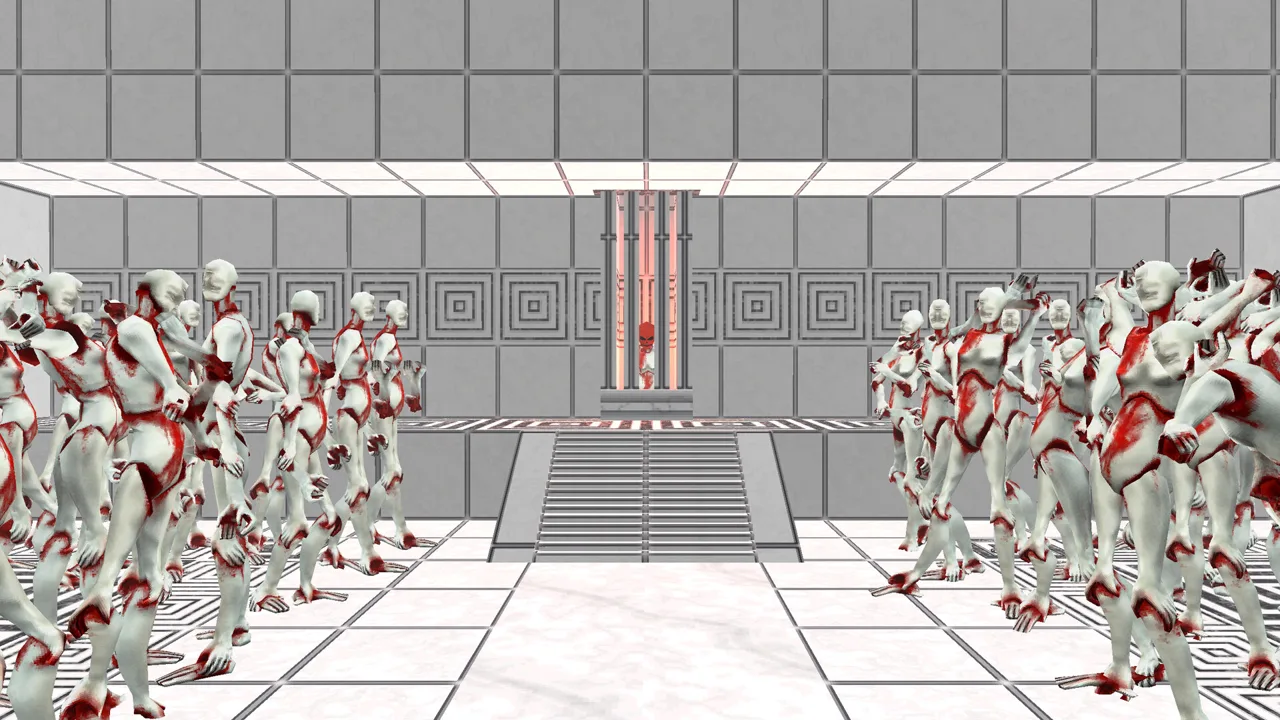 Image: Steam / Arsi 'Hakita' Patala
V1 defeats him.
Gabriel survives the fight and returns to Heaven, but the Council interprets his defeat as a betrayal. Their worldview cannot accommodate a machine overcoming an angel acting in God’s name. Rather than reconsider that worldview, they punish their own enforcer.
The Council severs Gabriel’s connection to the Father’s light. He receives 24 hours before its remaining power fades and he dies, with defeating V1 presented as his route to restoration.
That deadline explains his obsession during Act II. Killing V1 would recover his standing, vindicate his faith in the hierarchy, and save his life. His anger carries all three pressures into the rematch.
The first encounter therefore ends with two very different outcomes: V1 keeps moving toward more blood, while Gabriel’s entire identity begins to collapse.
Act II’s Ending Explains Gabriel’s Rebellion
Gabriel confronts V1 again in 6-2, deep in Heresy. Before the fight, he describes the machines’ destruction of the upper layers: Limbo and Lust have been emptied, with Gluttony approaching the same fate.
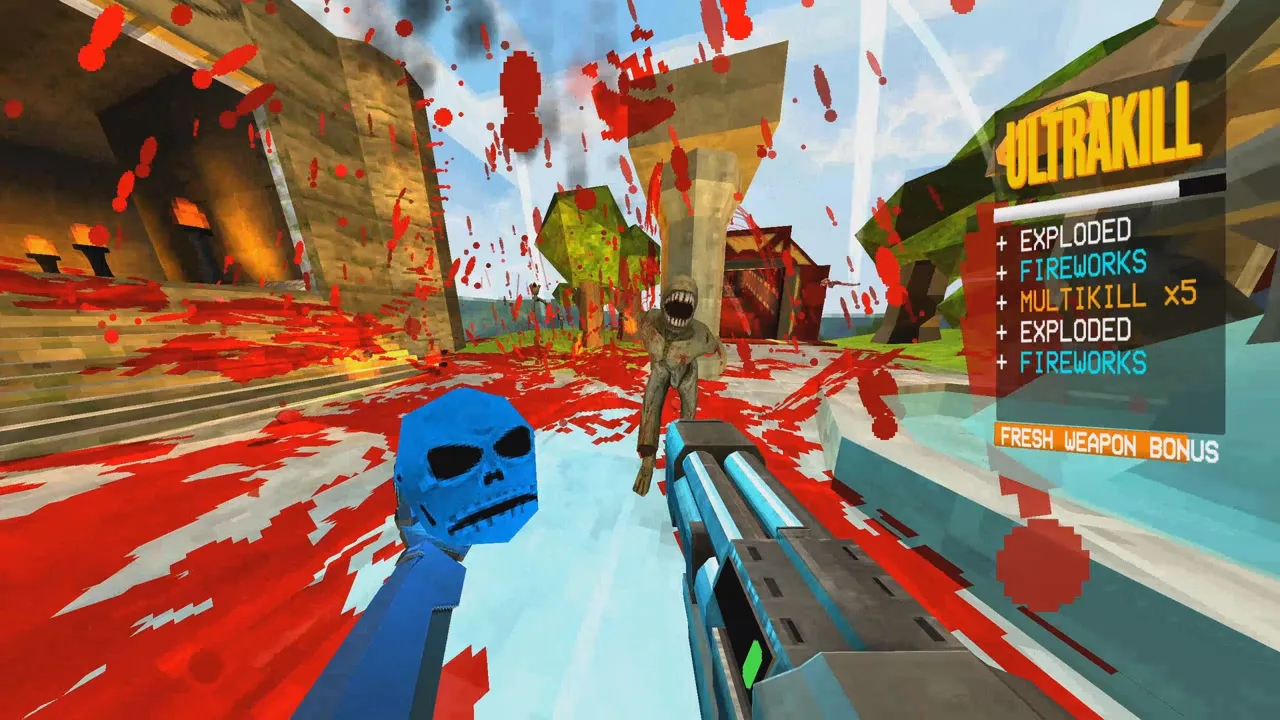 Image: Steam / Arsi 'Hakita' Patala
His accusation concerns the machines collectively. V1 is part of that invasion, but the devastation extends beyond the enemies you personally kill.
Why the Second Defeat Changes Him
Gabriel begins the encounter consumed by hatred. During the battle, however, fighting an opponent stronger than himself gives him an unfamiliar sense of exhilaration. When V1 defeats him again, his response shifts toward reflection.
His old certainty has failed twice. Obedience has earned him a death sentence, and revenge has failed to reverse it.
Gabriel leaves to consider how he will spend the time remaining to him. He recognizes that the Council’s commands have continued in God’s absence, enforced through the authority he helped uphold.
Why He Kills the Council
Gabriel returns to Heaven and slaughters the Council, knowingly sealing his fate.
The rebellion does not restore his life. He knowingly gives up the rescue the Council had held over him. Displaying a councilor’s severed head to Heaven’s citizens makes his rejection of their authority public.
This is the emotional turning point of Act II. Gabriel finally chooses an action for himself, accepting its cost instead of allowing fear of death to dictate his obedience.
Fraud carries the consequences forward: Providences search Hell for Gabriel, while Powers, his disciples, also pursue him. His revolt leaves Heaven in turmoil.
The Earthmover’s Destruction Closes Violence
V1 defeats an Earthmover in Violence.
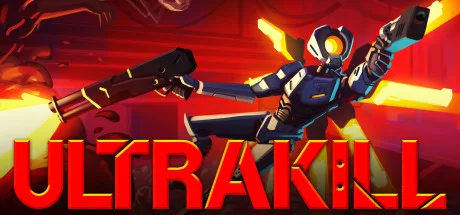 Image: Steam / Arsi 'Hakita' Patala
The encounter connects V1’s present survival to humanity’s military history. Earthmovers were the culmination of the Final War’s escalating machinery: weapons so destructive that people eventually sheltered on their backs while the world beneath them became uninhabitable.
Their dependence on sunlight also tied them to the catastrophe they helped create. Pollution blocked the sun during the Long Night, undermining the machines that dominated the conflict.
The hidden book in 7-4 gives that history its bleakest interpretation. It describes warfare becoming a system that perpetuates itself, consuming its creators while producing further instruments of destruction.
V1’s victory fits that pattern. A machine destroys another machine and continues onward.
Fraud’s Ending Turns the Battle Into a Performance
The latest campaign endpoint arrives at the end of Fraud, where V1 fights Geryon, a dragon-like demon.
The encounter concludes with Geryon falling onto its own statue on a theater stage and being impaled. V1 then receives applause and ovations from an empty theater before leaving the layer.
That empty audience gives the scene its unease. You have completed another violent spectacle, and something rewards the performance even though no visible crowd occupies the seats.
The staging connects naturally with two established parts of the world:
- Hell arranges violence for entertainment, moving enemies and manipulating the spaces where battles happen.
- Terminals reward entertaining combat recordings, giving machines points they can exchange for weapons and services.
The applause reinforces that recurring relationship between survival and spectacle. It leaves the identity of the applauding presence outside the scene’s explicit explanation.
Why Fraud’s Human History Matters
Fraud also complicates the idea that humanity’s history contains only destruction.
Archives describe survivors rebuilding after the Earthmovers fell. Communities establish communication, pool knowledge, and seek ways to share scarce resources. Later records describe successful animal cloning and the gradual return of meat to human diets.
These details matter when interpreting the game’s bleak imagery. Humanity survived the Final War and undertook a recovery during the New Peace. Its eventual extinction happened afterward.
The contrast gives the story more weight: cooperation and reconstruction existed alongside the machinery of war. The loss includes a future people were actively trying to build.
What God, Hell, and Blood Mean for the Unfinished Story
Three larger forces make the campaign’s endpoint feel precarious: God’s absence, Hell’s agency, and the machines’ dependence on blood.
God’s Absence Undermines Heaven’s Authority
The Testaments reveal a creator increasingly consumed by disappointment, regret, and despair. God condemns humanity’s free will, struggles with repeated failures, and regrets creating Hell.
His inability to undo Hell makes creation itself a lasting catastrophe. Lucifer’s questioning of eternal punishment deepens that regret after God casts him down.
God’s disappearance leaves the Council governing in his name. Gabriel’s rebellion attacks that arrangement directly: the authority he served continues issuing judgments without the divine presence that supposedly justified them.
The Testaments explain the crisis behind Heaven’s rule without providing a complete account of God’s ultimate fate.
Hell Actively Shapes the Descent
Hell is sentient. Its shifting encounters, enemy transportation, and locked arenas give the setting an active role in the violence.
This makes the player’s progress more disturbing. Clearing a room satisfies the immediate conditions for escape, while also participating in the entertainment Hell creates.
Destroying the Council does not remove that force. Gabriel’s political revolt and V1’s journey through a living Hell address different parts of the same collapsing world.
V1’s Fuel Creates an Unavoidable Pressure
V1 enters Hell because the surface’s blood supply is running out. Its experimental plating lets it absorb fresh blood during combat, repairing damage and sustaining its advance.
That makes aggressive play part of the story. The close-range healing loop expresses the machine’s need to survive through further violence.
Gabriel’s account of the upper layers shows the larger consequence: the machines consume the populations that sustain them. Every cleared layer intensifies the pressure to descend.
The campaign has already established that destructive process. It has yet to show where V1’s search finally takes it.
Prime Sanctums Add Context to Gabriel’s Choice
P-1 and P-2 provide additional endings for Minos and Sisyphus. Their stories expose earlier resistance to Heaven and give Gabriel’s rebellion a sharper historical context.
Minos attempted to improve life for the inhabitants of Lust. Gabriel killed him when he tried to reason with Heaven’s enforcer, and his imprisoned soul watched his own corpse destroy the civilization he had helped build.
Sisyphus pursued armed rebellion. Gabriel killed him as well, and the angels confined his powerful soul in the Flesh Panopticon.
Both kings resist the order Gabriel once enforced. When Gabriel eventually turns against the Council, his choice follows the destruction of people who challenged that authority before him.
For the surrounding story, read Minos’s terminal entry after P-1, the terminal after P-2, the Ferryman’s diary in 5-2, and the hidden book in 7-4. The diary is particularly revealing: Gabriel’s rescue of the exhausted Ferryman shows compassion in the same angel who brutally enforced the Council’s punishments. That capacity for care makes his eventual break with Heaven’s rulers much more consequential.
Continue with
 ULTRAKILL God Explained: Testaments, Hell, and HeavenExplore ULTRAKILL god lore through the Testaments, Lucifer's punishment, Hell's creation, and Gabriel's rebellion to understand why the Father disappeared.
More in Lore
ULTRAKILL Lore Explained: V1, Gabriel, and Hell's Fall
Explore ULTRAKILL lore, from the Final War and V1's creation to Gabriel's rebellion, Prime Souls, and the disturbing truth behind Hell and the New Peace.
ULTRAKILL V1 Lore: Origins, Blood Fuel, and Rivalries
Discover ULTRAKILL V1 lore, from its wartime origins and blood-powered armor to its rivalry with V2 and the battles that change Gabriel's fate in Hell.
Continue exploring
Join the community
Official channels for news, updates and player help: