
Early access · Release date: September 3, 2020
UpdatedULTRAKILL V1 Lore: Origins, Blood Fuel, and Rivalries
Discover ULTRAKILL V1 lore, from its wartime origins and blood-powered armor to its rivalry with V2 and the battles that change Gabriel's fate in Hell.
Jump to
Who Is V1 in ULTRAKILL?
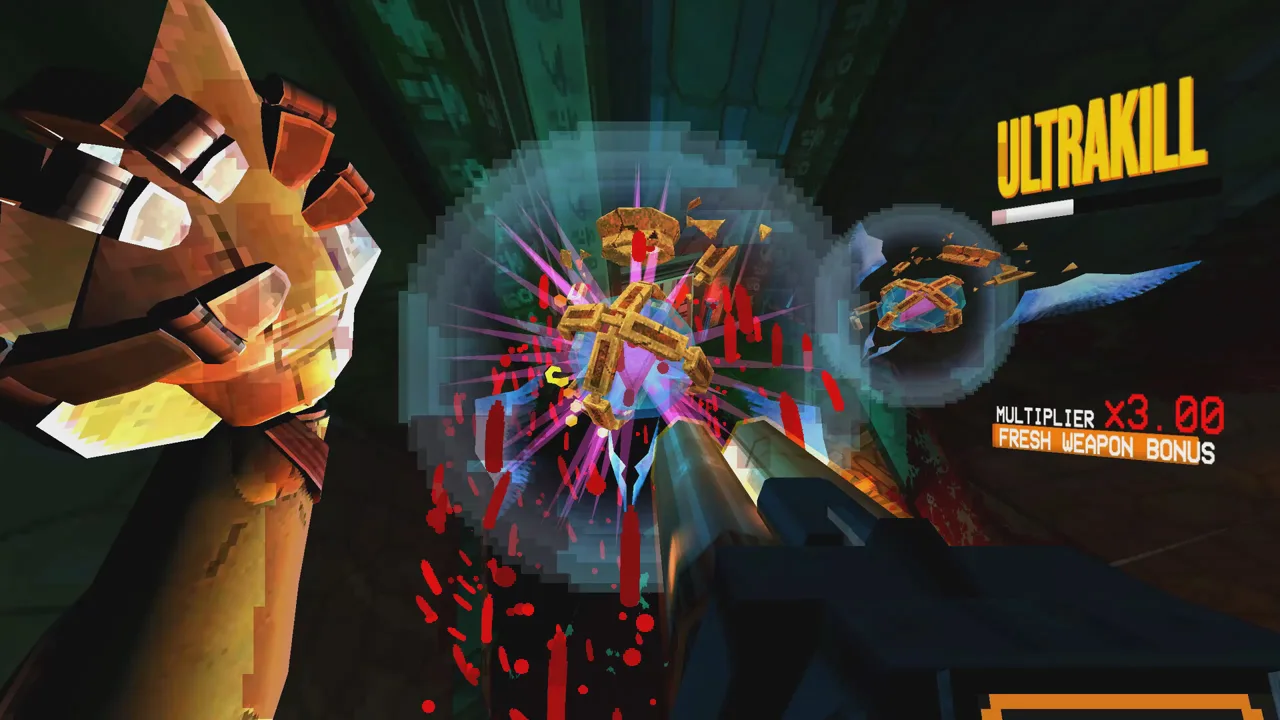
ULTRAKILL V1 turns every close-range fight into a chance to stay alive. The playable protagonist is a blood-fueled combat prototype that descends into Hell after humanity’s extinction, hunting for the fuel that keeps it running. Its ability to absorb fresh blood through its armor explains why charging toward danger is central to both the combat and the character.
V1 belongs to the V model series, a machine design developed for war. Its defining feature is the ability to repair damage while fighting, giving it a way to survive repeated encounters without stopping for a separate refueling process.
That makes the campaign’s premise brutally practical. Humanity is gone, blood on the surface is running out, and Hell contains creatures that bleed.
Official page: ULTRAKILL (store.steampowered.com)
V1’s Origins in the Final War
The Final War drove humanity into an escalating arms race built around blood-powered machines. Each new weapon created demand for something capable of destroying it, eventually producing the enormous Earthmovers.
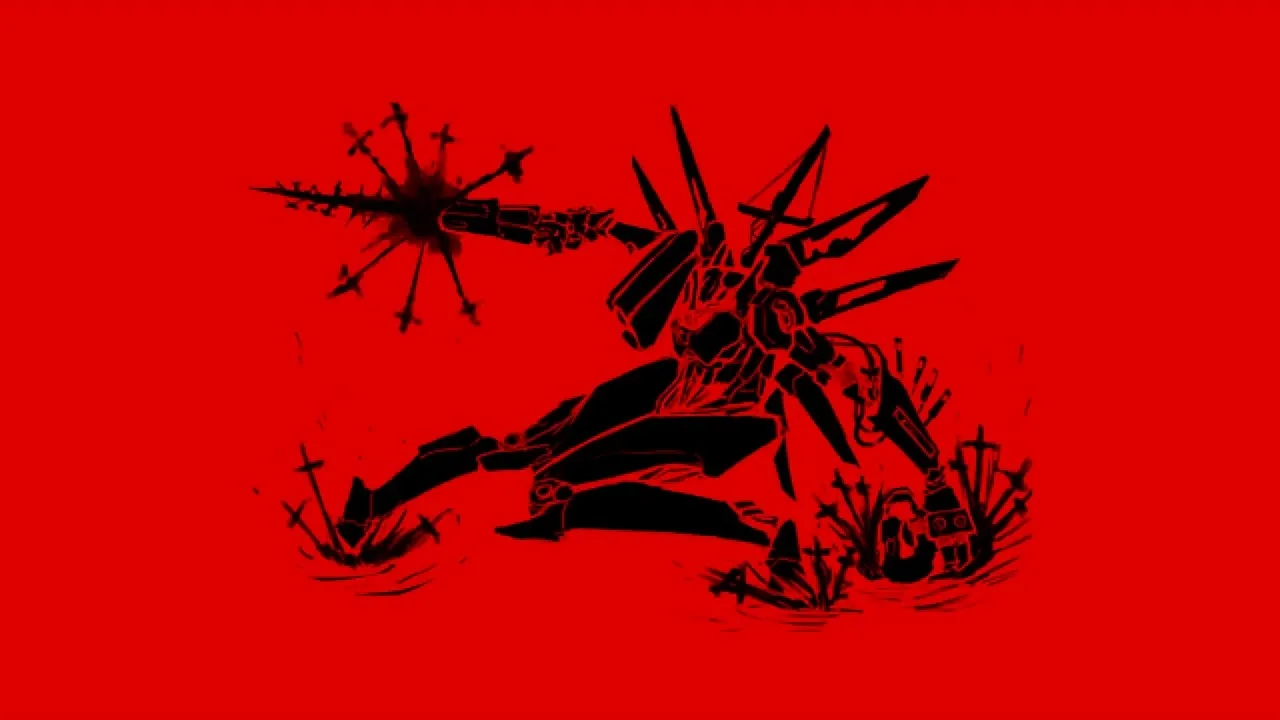
V1 emerged near the end of this conflict. Its experimental construction favored battlefield recovery: sustain damage, reach an enemy, draw blood, and repair the damage before the next exchange.
Then the war ended.
During V1’s prototyping phase, the New Peace removed the demand for its intended role. Planned production was canceled, and development shifted toward V2, a revised machine better suited to conditions where constant bloodshed was unnecessary.
Neither model reached mass production. V1 enters the story as a surviving prototype from an abandoned military project, carrying technology designed for a battlefield into the afterlife.
The sequence matters when reading the wider story: the Final War, the New Peace, and humanity’s extinction are distinct events. V1’s wartime origin alone does not explain how humanity disappeared.
Why V1 Needs Blood—and Why Its Armor Matters
Blood powers the machines of this world, but V1’s exterior plating gives it an unusual advantage. It can absorb blood on contact and use it to repair itself during combat.

The tradeoff is durability. The plating must be thin enough to perform that function, leaving V1 less physically resilient than a machine built with conventional armor.
This creates a clear relationship between lore and gameplay:
- Close-range attacks provide recovery opportunities. Damage an enemy nearby so its fresh blood reaches you.
- Mobility helps you survive between those opportunities. Use slides, jumps, and dashes to avoid attacks while approaching.
- Successful enemy-attack parries restore health. Parry incoming attacks to recover during combat.
V1’s design rewards aggression, but aggression still requires control. Enter close range when you can land damage, then move before the next attack connects.
Its survival also depends on a resource it consumes through violence. Every successful encounter keeps the machine running while reducing the population it feeds on.
V1 vs. V2: Two Designs, Two Priorities
V2 makes V1’s engineering choices easier to understand. The machines share a recognizable design, but their armor reflects different intended environments.
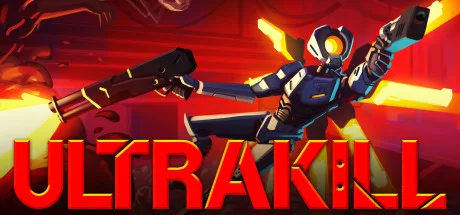 Image: Steam / Arsi 'Hakita' Patala
| Feature | V1 | V2 |
|---|---|---|
| Development context | Wartime prototype | Revised model developed during the New Peace |
| Exterior plating | Thin, experimental blood-absorbing plating | Standardized, more durable plating |
| Refueling | Absorbs blood through contact | Requires a separate refueling process |
| Production outcome | Never mass-produced | Never mass-produced |
Their rivalry begins in 1-4: CLAIR DE LUNE, where V1 defeats V2 and acquires its lost arm after its opponent escapes.
V2 then hunts other machines for blood, obtains a replacement arm from one of its victims, and modifies that replacement into a mobility tool using scavenged parts. It also studies the earlier fight. By the rematch in 4-4: CLAIR DE SOLEIL, it has adapted techniques from V1 and expanded its arsenal.
That preparation gives the second encounter a personal edge. V2 wants revenge and its original arm back. The fight ends with V2’s destruction, leaving V1 to collect the Whiplash.
Pay attention to how these encounters change your equipment. V1’s growing abilities are tied directly to the machines it defeats.
How V1 Changes Gabriel’s Story
Gabriel brings authority, conviction, and pride into his encounters with V1. As the Judge of Hell, he expects a machine to obey his warning—or be destroyed.
Their first battle takes place in 3-2: IN THE FLESH. V1 continues downward despite Gabriel’s command to turn back and defeats him.
The consequences reach far beyond the arena. Heaven’s Council interprets Gabriel’s defeat as betrayal, strips him of the holy light sustaining him, and gives him 24 hours to destroy the machine.
When they meet again in Heresy, Gabriel’s anger is intensely personal. He also describes the destruction spreading through Hell: machines have emptied Limbo and Lust, with Gluttony following.
That devastation belongs to the wider machine invasion. V1 is the machine Gabriel confronts directly, while other machines are also consuming Hell’s inhabitants.
During the rematch, Gabriel’s fury gives way to enjoyment of the fight. After another defeat, he begins questioning the authority he served and the violence he committed in its name. He ultimately kills the Council despite knowing his remaining life is limited.
V1 drives this transformation through combat. Gabriel supplies the emotional response: humiliation, hatred, exhilaration, and finally a decision to act for himself.
The Earthmover Encounter Brings V1 Back to Its Origins
7-4: ...LIKE ANTENNAS TO HEAVEN places V1 against an Earthmover, connecting the machine’s descent through Hell with the war that produced it.
Earthmovers represent the destructive scale reached by the Final War. Their immense bodies supported human settlements, while their weapons helped devastate the world those people depended on. Their need for solar power also made them vulnerable to the darkness created by the war’s environmental destruction.
The encounter creates a striking difference in scale.
Read the book on the Earthmover’s exterior before finishing the level. Its account of warfare continuing beyond humanity’s needs gives the battle a larger meaning: V1 is confronting another surviving expression of the same machinery of destruction.
V1 and the Prime Souls
The Prime sanctums reveal another side of V1’s role. These battles put the machine against figures whose histories involve resistance to Heaven.
Minos Prime is the soul of King Minos. Before the campaign, Minos sought a better existence for the inhabitants of Lust. Gabriel killed him, and his soul was confined within the Flesh Prison.
Sisyphus Prime comes from a different rebellion. King Sisyphus assembled an army against Heaven’s authority before Gabriel ended the insurrection. His soul was imprisoned in the Flesh Panopticon.
V1 breaks into these prisons and fights the beings inside them. Their political aims and personal histories give the encounters weight, even though the machine’s descent remains driven by its need for blood.
For a P-rank run:
- Earn a P rank: Meet the S-rank requirements for time, kills, and style without dying or restarting from a checkpoint.
Taking damage does not automatically invalidate a P rank. Keep fighting if the run is still recoverable.
Where to Find More of V1’s Story
Much of V1’s background sits outside direct dialogue. Read enemy terminal entries and inspect books between encounters to connect the machine’s actions with the world around it.
Start with these:
- V2’s terminal entry: Explains the V models’ development, armor differences, and canceled production.
- V2’s second entry: Covers its recovery, replacement arm, and preparations for revenge.
- The book in 2-2: Describes Gabriel’s killing of Minos and the collapse of Lust’s hopes.
- Books in Violence: Explore the human cost of blood-powered warfare.
- Prime sanctum terminals: Expand the history of the terminals and their interest in machine combat.
The terminals themselves give stylish fighting an additional purpose within the story. They trade with machines and value recordings of their battles as entertainment, making your performance part of Hell’s strange economy.
Read those entries during a separate exploration run. Leave the timer behind long enough to understand the lives, failed projects, and ruined civilizations V1 passes through.
Continue with
 ULTRAKILL Ending Explained: Gabriel, Fraud, and FateExplore the ULTRAKILL ending through Gabriel's rebellion, the Earthmover's destruction, and Fraud's finale, with a clear look at where the story stands.
More in Lore
ULTRAKILL God Explained: Testaments, Hell, and Heaven
Explore ULTRAKILL god lore through the Testaments, Lucifer's punishment, Hell's creation, and Gabriel's rebellion to understand why the Father disappeared.
ULTRAKILL Lore Explained: V1, Gabriel, and Hell's Fall
Explore ULTRAKILL lore, from the Final War and V1's creation to Gabriel's rebellion, Prime Souls, and the disturbing truth behind Hell and the New Peace.
Continue exploring
ULTRAKILL Earthmover Guide: Beat 7-4 and Escape Alive
Beat the ULTRAKILL Earthmover with defense system counters, brain fight tips, difficulty changes, escape timers, and steps for using the crane skip in 7-4.
ULTRAKILL Gabriel Guide: Boss Fights, Tips, and Lore
Master ULTRAKILL Gabriel with attack counters, weapon tips, healing strategies, and P-rank advice. Explore his boss battles and story through Act II today.
Join the community
Official channels for news, updates and player help: